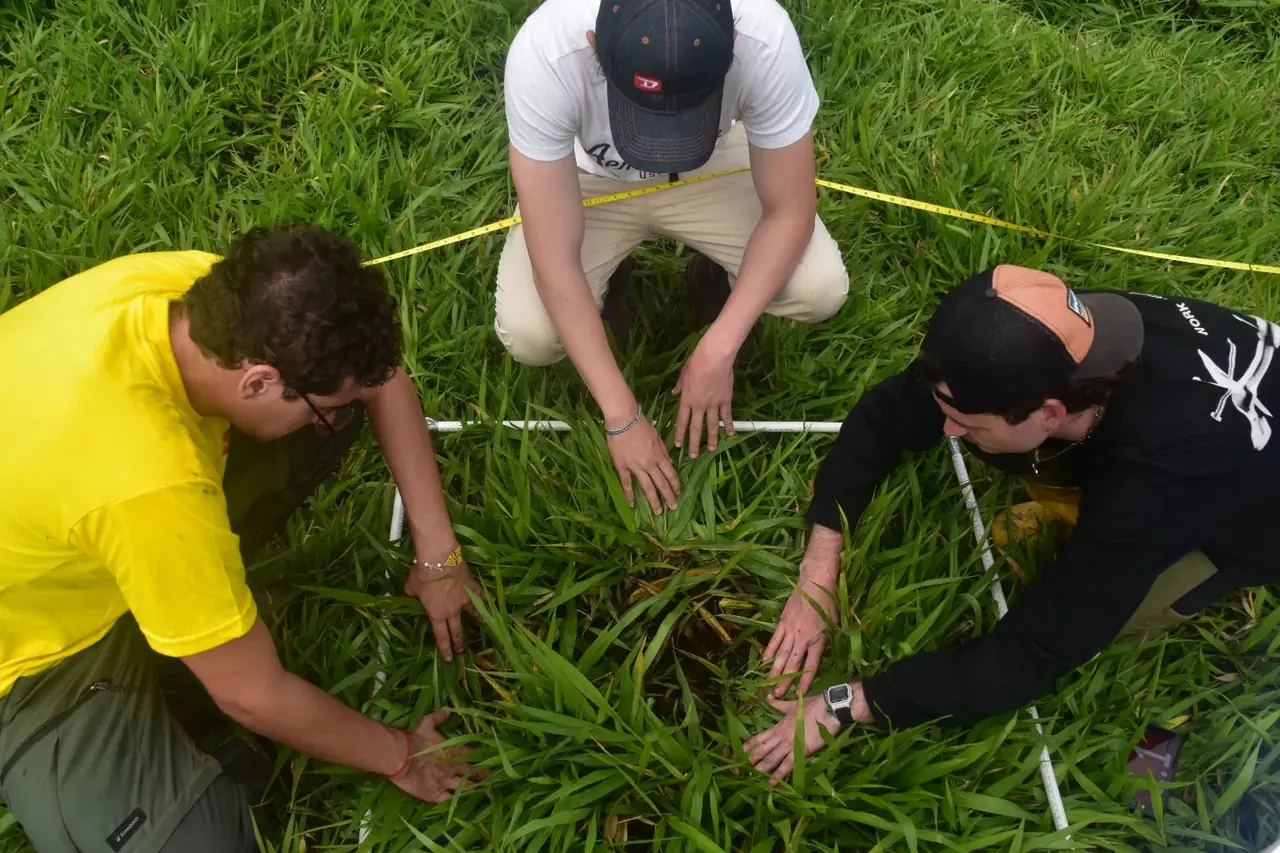
Measuring a permanent forest plot.
Fundación Tangaré / Biodiversity
Biodiversity of the field site: what has been recorded so far
Species lists and survey results from La Hesperia, the cloud forest where we work. They are a starting point for research, not a finished inventory.
The 2025–2026 surveys
A baseline for everything that comes next.
In 2025 and 2026 specialist biologists worked in two areas of the reserve using standard field methods: camera traps, mist nets and live traps for mammals, point counts for birds, timed searches for frogs and reptiles, permanent vegetation plots for trees, and samples taken from the streams. Seven groups of organisms were covered, from trees and epiphytes to stream insects and fish. What they describe is a varied forest with a complex structure, well along in its recovery, with clean water and a number of species that cannot persist in degraded habitat.
- Plants
- 182+ species in the surveys
- Mammals
- 30 in the surveys, 43 on the full list
- Birds
- 125 in the surveys, 297 confirmed on the full list
- Amphibians and reptiles
- 21 in the surveys, 52 on the full list
- Dung beetles
- 37 species
- Streams
- Good to very good water quality
These numbers are a snapshot. The surveys covered a small part of the reserve, and species accumulation curves suggest that more species remain to be found among bats, small mammals, amphibians and epiphytes.
The forest itself
Structure, carbon and the plants that grow on other plants.
Trees
Half a hectare of forest plots was enough to find 84 species of trees thicker than 10 cm, a figure that matches a montane forest with good structure. Laurels dominate the canopy at around 30 m, led by the canelo (Ocotea pichinchensis); pioneers such as Cecropia fill the gaps where old trees fall. Above ground, those plots hold about 100 t of living biomass, equal to around 50 t of carbon.
Epiphytes and orchids
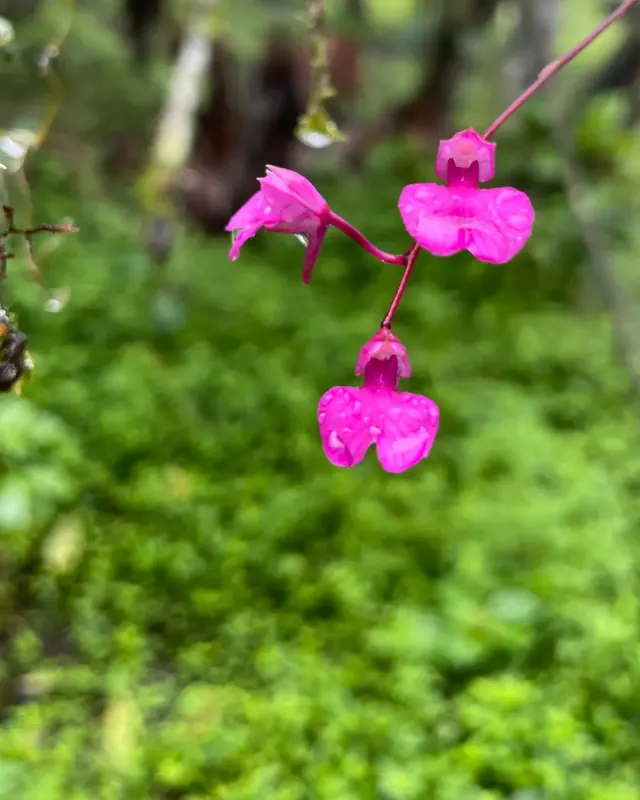
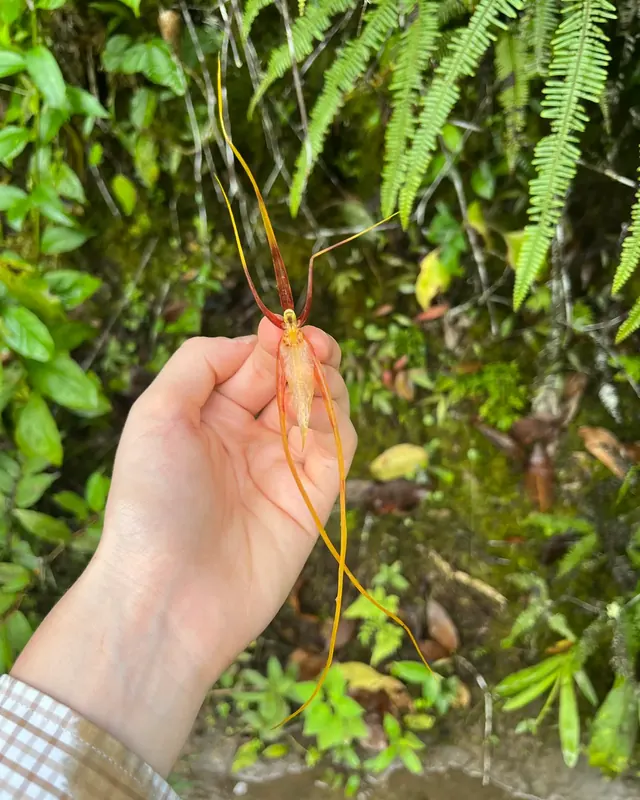
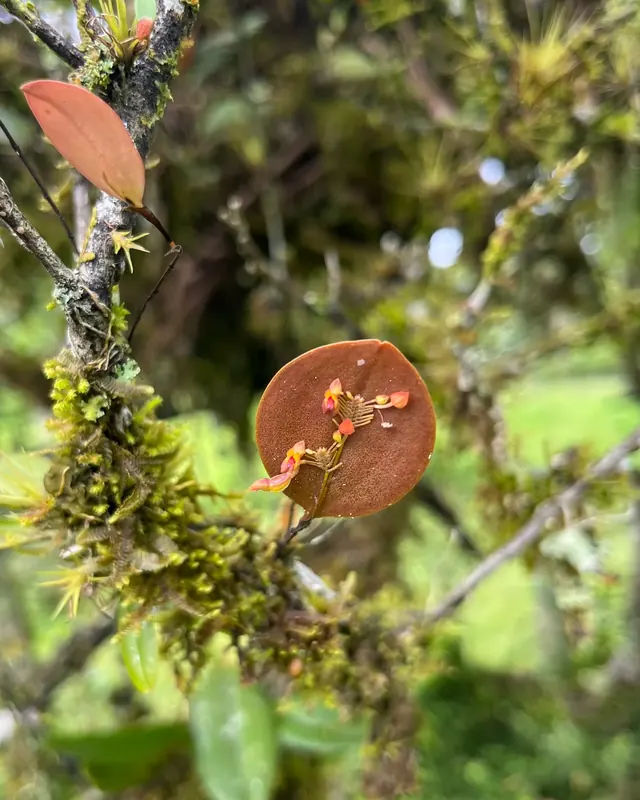
Twenty sampled trees carried 602 epiphytes of 33 species, mostly bromeliads, followed by aroids, ferns, gesneriads and orchids. Thirteen orchid species have been identified so far, from the magenta Comparettia falcata to miniature Lepanthes smaller than a fingernail.
Plants of conservation concern
Seven of the plants recorded are found only in Ecuador. They include the wax palm Ceroxylon echinulatum (Vulnerable), the bromeliad Tillandsia acosta-solisii (Endangered), the tree Daphnopsis grandis (Endangered), Banara regia (Vulnerable) and the sangre de drago Croton floccosus (Near Threatened). The combined plant list reaches 156 genera.
Mammals
43 species: 17 bats, 12 carnivores and 7 of conservation concern.
Primates and cats
The Critically Endangered Ecuadorian capuchin (Cebus aequatorialis) and the clouded tiger cat (Leopardus pardinoides) are the two species we follow most closely. The puma and the ocelot were both recorded in the surveys, a sign that the forest still has the space and prey to support large predators.
Andean specialists
The Andean bear (Tremarctos ornatus, Vulnerable) feeds on bromeliads, fruit and palm hearts. A camera trap at about 1,560 m recorded the western mountain coati (Nasuella olivacea, Near Threatened), a species of cloud forest and páramo.
Bats
Bats are the largest group, with 17 species. They include the spectral bat (Vampyrum spectrum, Near Threatened), the largest bat in the Americas, which hunts birds and rodents. Bats are also the group with the most species still to be recorded.
No signs of hunting
Neither survey found evidence of hunting, and tracks of collared peccary and ocelot appeared in both.
Birds
297 confirmed species from 50 families.
Where two regions meet
Over a short slope, birds of the humid Chocó foothills mix with those of the upper cloud forest. The list includes 31 hummingbirds and 21 species with small world ranges, restricted to the Chocó or Tumbesian regions.
Species to know
Five toucans, among them the Plate-billed Mountain Toucan (Andigena laminirostris) and the Choco Toucan (Ramphastos brevis); the Toucan Barbet (Semnornis ramphastinus, Near Threatened); the Andean Cock-of-the-rock; two quetzals; and the Dark-backed Wood Quail (Odontophorus melanonotus, Vulnerable).
How the list was built
The historical checklist kept by R. Scott Winton until 2012 was compared with the 2025–2026 surveys; the surveys added 13 species and confirmed 6 that had been pending. Another 36 have been reported but are not yet confirmed.
Amphibians and reptiles
52 identified species: 25 amphibians and 27 reptiles.
Rain frogs
Fourteen species of Pristimantis make up the largest group. They lay their eggs on land and skip the tadpole stage, so they depend on a damp, shaded forest floor. Pristimantis crenunguis and Pristimantis cf. pteridophilus are endemic to Ecuador and Vulnerable. At least five more rain frogs are still unidentified.
Frogs of streams and leaves
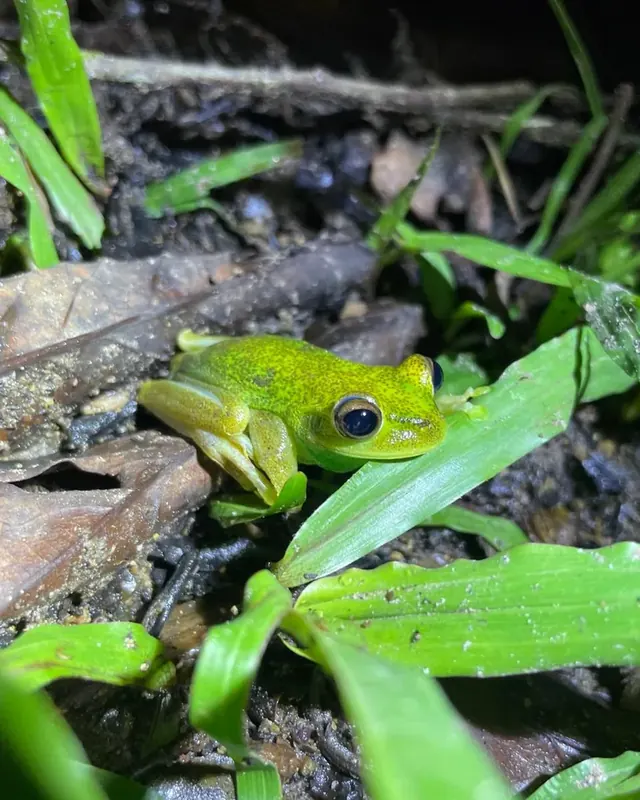
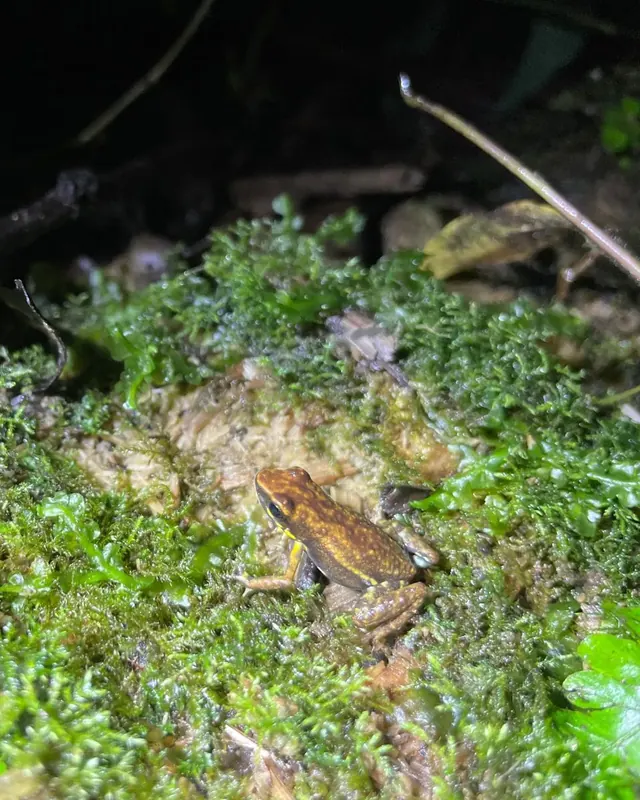
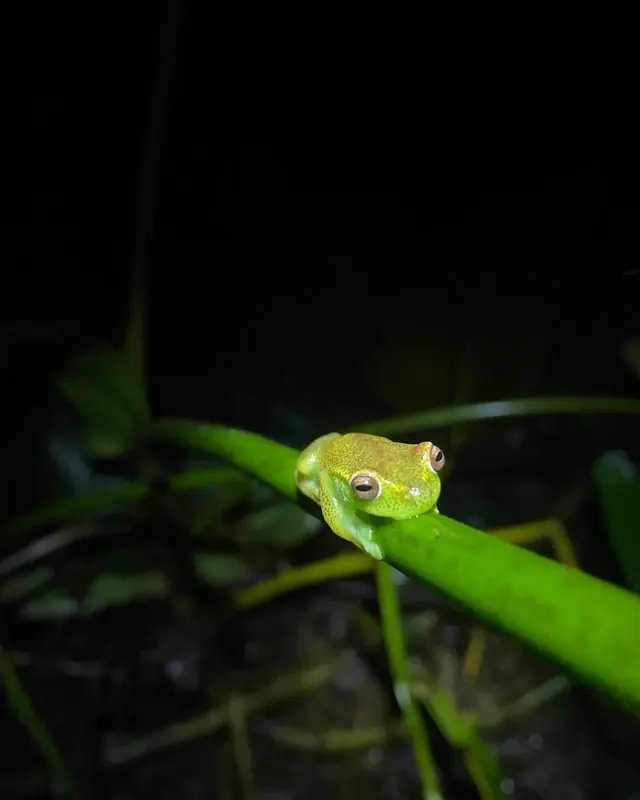
Three glass frogs call from leaves over the streams; the Darwin-Wallace poison frog (Epipedobates espinosai) lives only in western Ecuador; and two frogs take their names from the local parish, the Tandapi stream frog (Hyloscirtus alytolylax) and Pristimantis luteolateralis.
Snakes
Snail-eating snakes such as Dipsas elegans (Vulnerable) and Dipsas andiana (Near Threatened), both endemic to Ecuador, share the forest with rarely seen venomous species.
Sources
The list combines an inventory by David Brouwer (2019), a field guide to the frogs written by Iris Adams (2024) and the 2025–2026 surveys. Night searches have covered only a fraction of the reserve, and almost no work has been done in the forest above 1,800 m.
Insects, fish and streams
Small animals that show the health of the forest and its water.
Dung beetles
Thirty-seven species, with Onthophagus the richest genus. Five are highly sensitive to disturbance and two are endemic to Ecuador. Because they react quickly to changes in the forest, their presence points to habitat in good condition.
Butterflies
Xavier Silva del Pozo, Ph.D., documented around 90 butterfly taxa from 62 genera in a separate inventory, from clearwing butterflies of the shady understory to morphos and owl butterflies that patrol the trails.
Fish and aquatic invertebrates
The streams hold six species of Andean climbing catfish (Astroblepus), small fish that only survive in cold, clear water rich in oxygen; Astroblepus fissidens is found only in northwestern Ecuador and is Near Threatened. Caddisflies, mayflies and stoneflies, which vanish quickly from polluted water, dominate the roughly 40 aquatic invertebrate taxa found, and two standard indices (BMWP/Col and EPT) place the streams between good and very good.
Photographed in the reserve
What is still unknown
Open questions for students and researchers.
Bats and small mammals
The groups with the most species still unrecorded. Mist netting and live trapping over more seasons would fill the list.
Amphibians at night and higher up
Night surveys and sampling above 1,800 m, where very little work has been done.
Epiphytes and orchids
Canopy plants are hard to reach and many flower only for a few weeks a year.
Long-term camera trapping
Longer deployments to follow carnivores and primates across years.
Sources: La Hesperia species lists and the 2025–2026 field surveys, which can be cited as La Hesperia (2026). Conservation at La Hesperia
This work continues because people choose to support it
You can fund it with a donation, or take part in it as a researcher, intern or volunteer.