
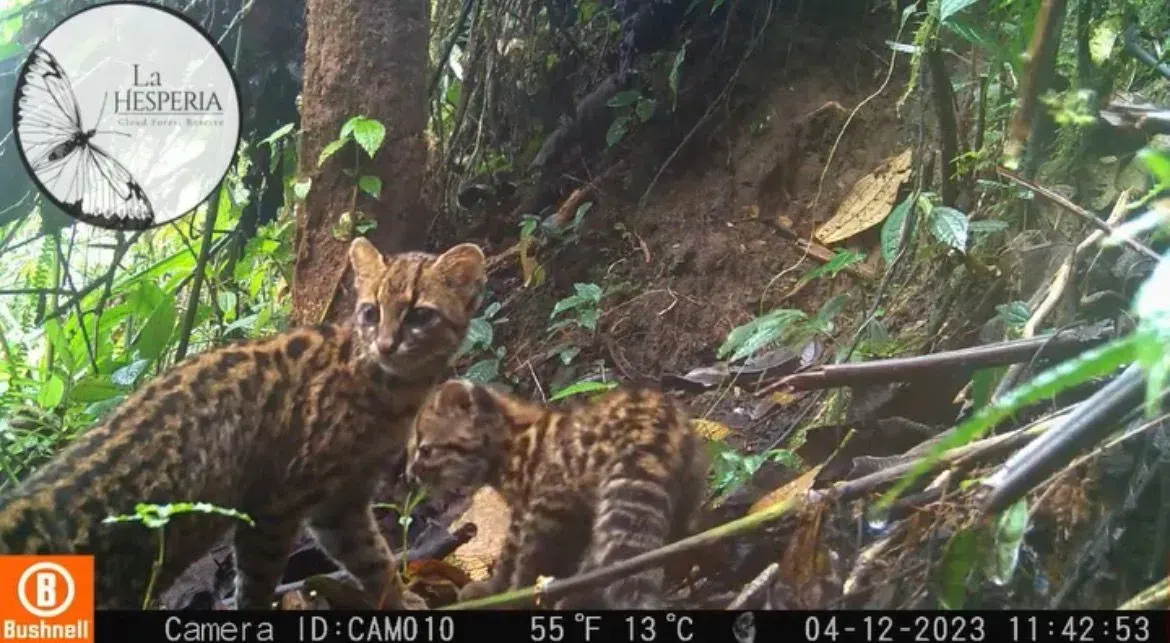
Clouded tiger cats on a camera trap at La Hesperia.
Fundación Tangaré / Clouded tiger cat
The clouded tiger cat: a wild cat science recognized only in 2024
Camera traps in the forest where we work have recorded Leopardus pardinoides, a small spotted cat that lives only in mountain cloud forest, a habitat that keeps shrinking.
- Recognized as a species
- 2024
- Size
- About that of a house cat
- Historical range lost
- About half, by the study’s estimate
- Conservation status
- Not yet assessed on its own
A new species, already in trouble
Until recently, biologists recognized one or two species of tiger cat, the small spotted cats of Central and South America also called oncillas. In 2024 a study by de Oliveira and colleagues, published in Scientific Reports, split off a third species: the clouded tiger cat, which lives in the mountain cloud forests of Central America and the Andes.
Its habitat is exactly the kind of forest that is still being cut down, and the authors calculated that around half of the area it once occupied has been lost. As a newly separated species it has no conservation assessment of its own yet; specialists are calling for one.
At our field site
Camera traps that have run without interruption for more than three years confirmed the species at La Hesperia. The records come from the upper part of the reserve, where the forest lies above about 1,500 m.
The same cameras also capture pumas, Andean bears and Ecuadorian capuchins. Altogether, 43 species of mammals are known from the site.
Why it is still here
A cat like this needs large areas of intact cloud forest. La Hesperia has protected its forest since 1971 and belongs to the Puma Biological Corridor, which works to keep forest connected across the western Andes. La Hesperia is also part of the Tiger Cats Conservation Initiative and the Pampas Cat Working Group.
How we monitor it
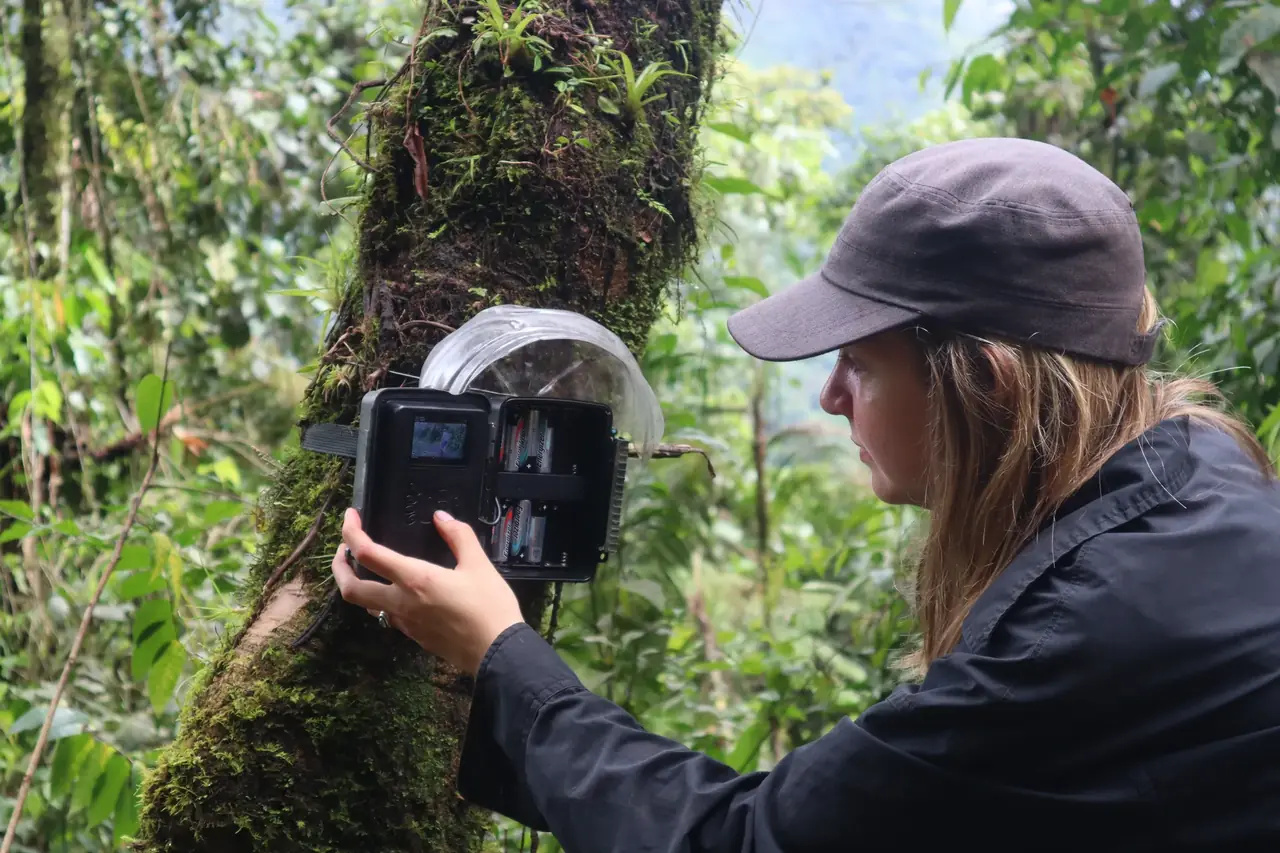
Camera traps all year
Our mammal monitoring concentrates on carnivores. Each new photo helps map where this cat moves and which parts of the forest it prefers.
Open for research
Interns and researchers can join the cat and primate monitoring or use it as the starting point for their own study.
More cameras, more forest covered
A camera trap with batteries and a memory card costs about $300. Each one extends the area we can follow.
This work continues because people choose to support it
You can fund it with a donation, or take part in it as a researcher, intern or volunteer.