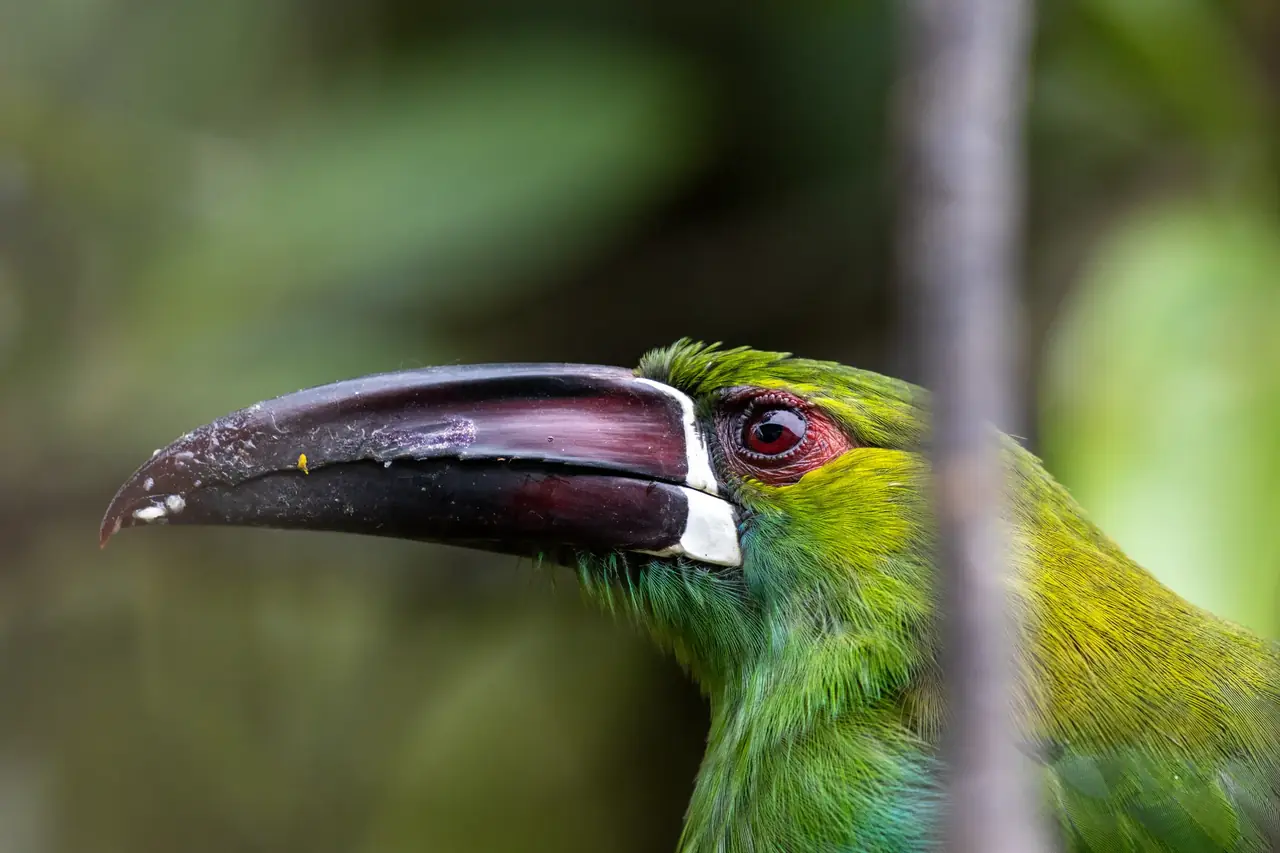
Plate-billed Mountain Toucan (Andigena laminirostris). La Hesperia.
Fundación Tangaré / Programs and projects
Programs and projects
Our work is organized in three programs. Each one groups the projects we run in the field, most of them at La Hesperia reserve, and new projects are added here as they start.
Conservation and Coexistence
Protecting cloud forest and its water sources, and working toward a landscape where people, wildlife and forest can live alongside each other.
Coexistence of people, wildlife and forest
This landscape is shared: forest, farms, roads and communities sit side by side, and wild animals move across all of them. On La Hesperia’s farm we run a permanent management project that tests different ways of keeping wild animals from eating crops and farm animals. We also apply techniques that make room for wildlife on the farm itself: pollinators, seed dispersers and organisms from every level of the food chain. This work includes planting living posts and living fences.
Water, soil and microhabitats
We set up and monitor keylines and jagüeyes (small ponds that hold rainwater) to prevent erosion, help water soak into the ground and create microhabitats for plants, macroinvertebrates and amphibians. These measures also help the landscape adapt to climate change.
Responsible pet ownership
We manage projects on responsible pet ownership and vaccination, and share the information with local communities.
Boundary patrols
Together with La Hesperia reserve we patrol the limits of the protected forest.
Reforestation and restoration
Restoring degraded areas at the forest edge with native species raised in the nursery, so the forest grows instead of only being held where it is.
Trail maintenance
Keeping open the trails that give researchers and staff access to the forest.
Research
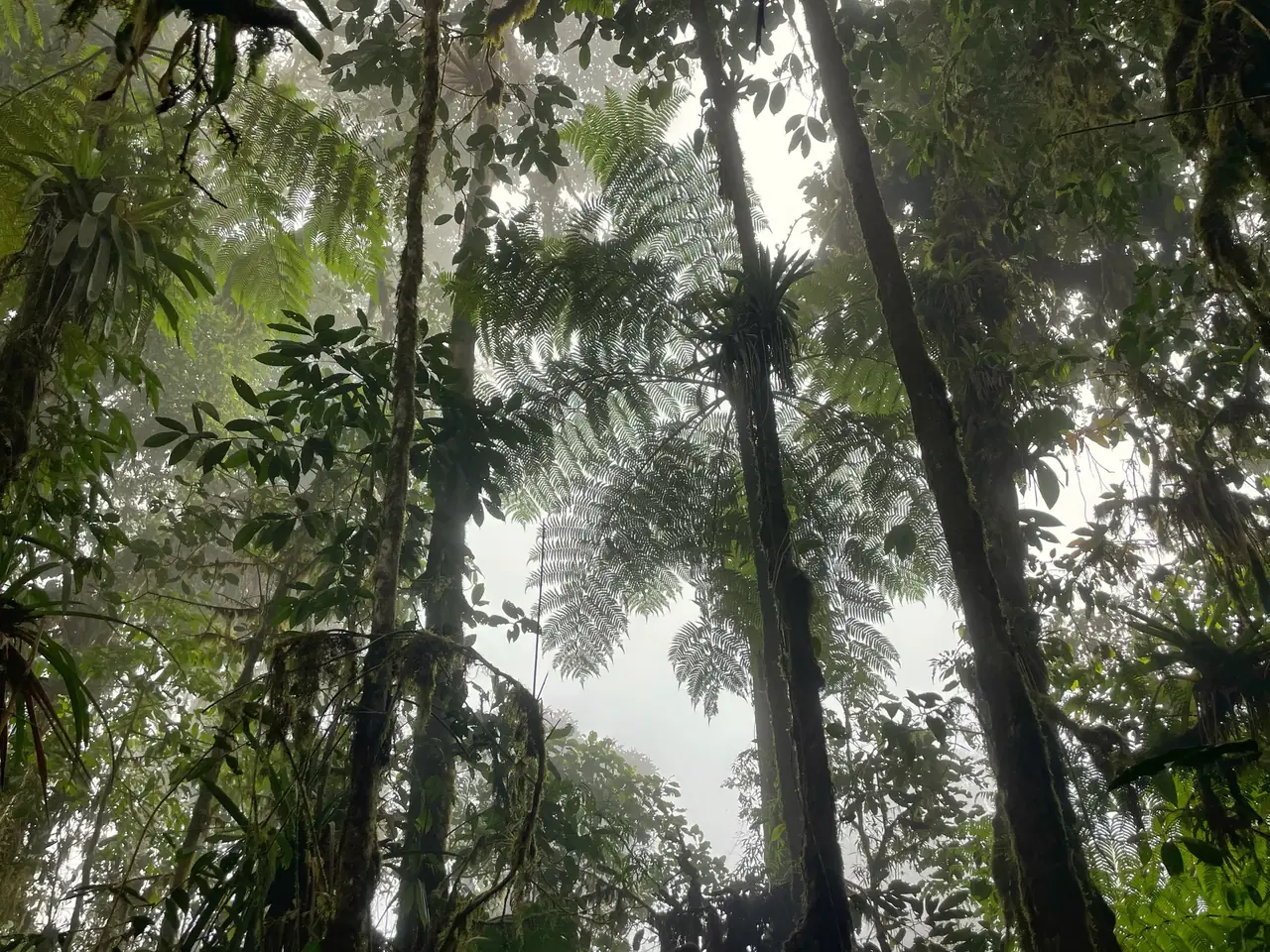
Long-term monitoring and field studies that describe what lives in this forest and how it is doing.
Mammal monitoring with camera traps
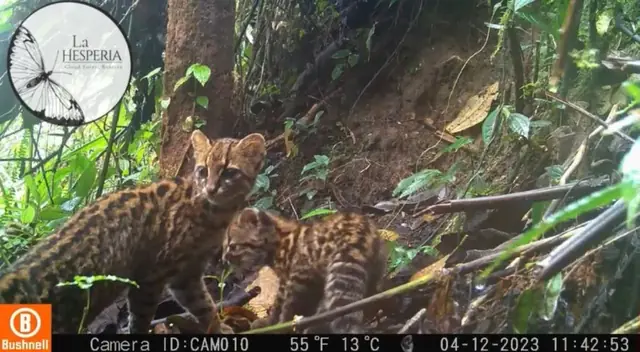
Camera traps follow the mammals of the forest, with an emphasis on carnivores such as the puma, the Andean bear, the tayra and the clouded tiger cat (Leopardus pardinoides), recognized as a separate species in 2024 (more about it). The aim is to understand how their populations change, so that conservation decisions rest on data.
Ecuadorian capuchin: behavior and vocalizations
The Ecuadorian capuchin (Cebus aequatorialis) is Critically Endangered, and at least four of its groups use the forest at La Hesperia. We record unusual behaviors and vocalizations of the species. A study of behavioral contagion in one of these groups was published in the American Journal of Primatology in 2026 (see publications). More about the species.
Birds in farmland
We monitor the diversity and abundance of birds in the agricultural areas of La Hesperia, to assess the changes that follow the adoption of good farming practices.
Jagüey monitoring
We monitor the jagüeyes, the small rainwater ponds built on the farm.
Climate records
We record climate data at the site.
New and independent projects
Students and researchers can propose their own study and carry it out with our support through the research and internship program. New projects are added here as they start.
Environmental Education and Communication
Sharing the forest and what we learn in it with students and the public.
Field trips
Visits that bring students into the forest to learn from it directly. They are for the pupils of the local school in Recinto La Esperie, and for schools, high schools and universities from Ecuadorian cities and from other countries. Schools can also arrange a trip as a group.
Weekly lectures
Once a week we give an academic lecture, on a different topic each time, to the volunteers, interns and families visiting La Hesperia.
Ways to take part
Research and internships
Work on one of these projects or bring your own.
Volunteer
Support the daily work of monitoring, restoration and trails.
Donate
Fund a program directly.
Propose a project
If you are a researcher or an organization and want to work in this forest, write to us with a short description of your idea.
This work continues because people choose to support it
You can fund it with a donation, or take part in it as a researcher, intern or volunteer.